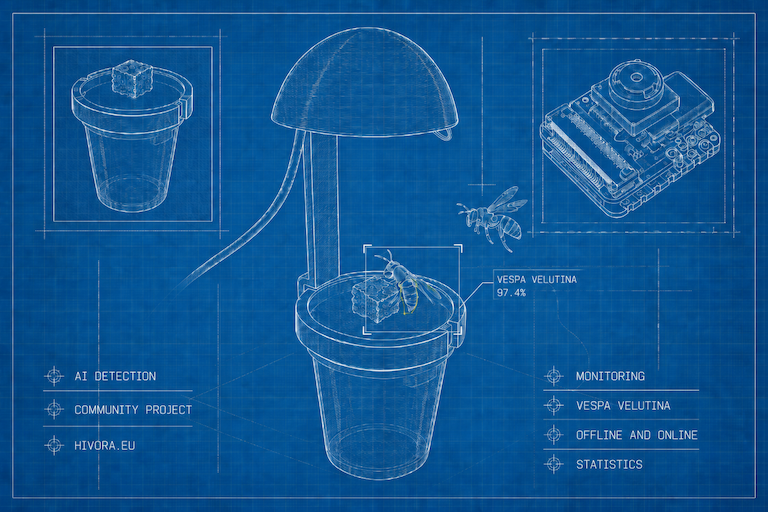
The problem: what happens when nobody is watching?
Anyone who deals with the Asian hornet (Vespa velutina) knows the problem. You stand at the bait trap (Locktopf) and watch the goings-on at one particular moment – and wonder what happened in the meantime.
With the Hivora platform and the HornetLog app, sightings can already be recorded and analyzed quite well. But that only works if someone is on site to document the sighting, for example with a mobile phone.
That is exactly where the challenge lies.
Hornets show up irregularly. Among other things, you want to know how often the bait trap is visited or how many animals are buzzing around it at the same time. Classic bait traps therefore only deliver individual snapshots. For a well-founded observation of the Asian hornet, that alone may not be enough.
The idea: the bait trap does the watching itself
I wanted to close this blind spot.
The solution: the bait trap itself becomes the observer.
That is how Hivora Sense came about.
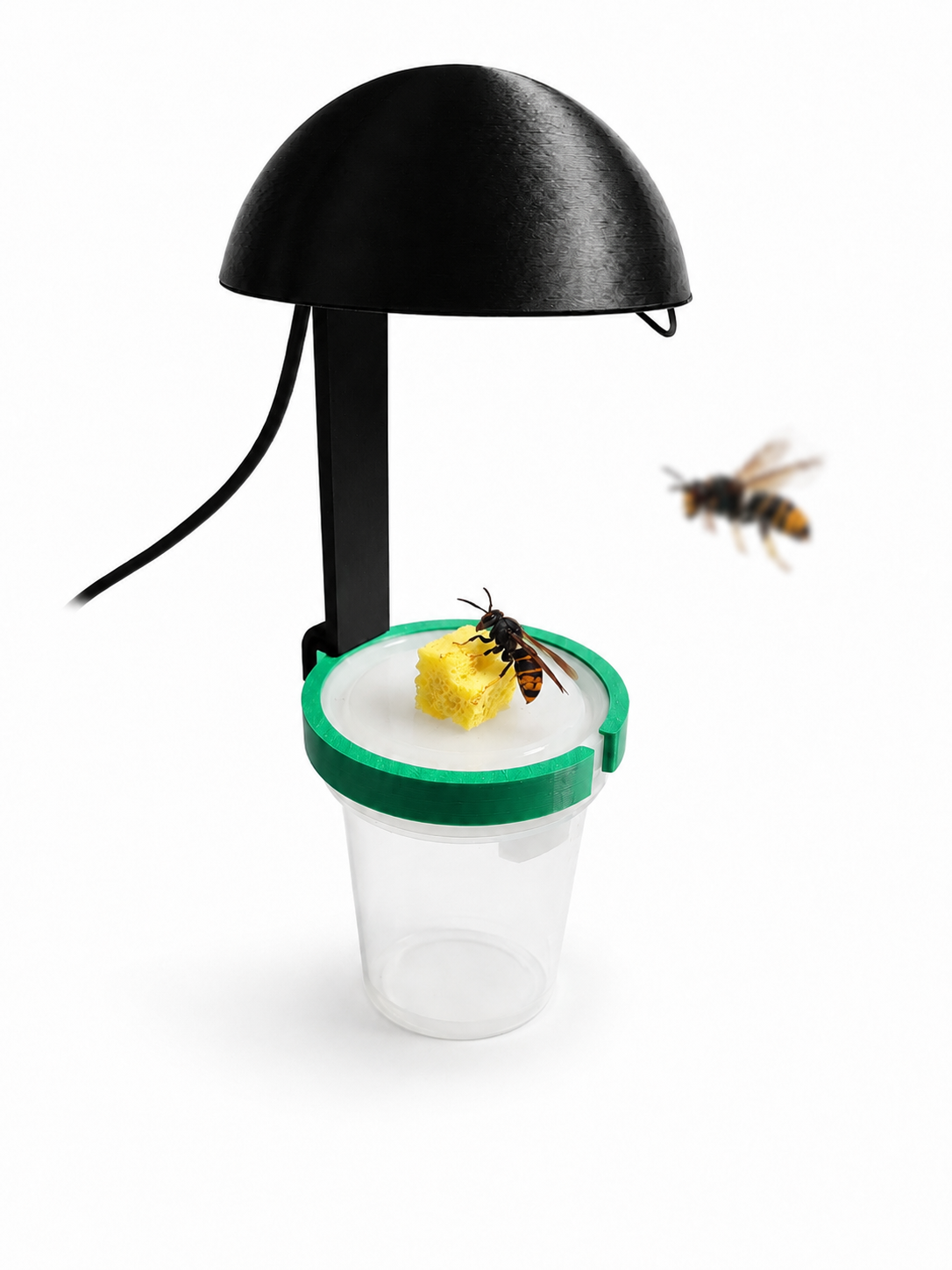
The system is based on the XIAO ESP32-S3 Sense. This small board has a camera and enough power to run simple AI directly on the device.
Detection runs entirely locally. The device decides for itself whether an Asian hornet is in the picture and whether an image should be saved or even sent to the cloud.
AI directly on the device
An important part of the project is the model.
I trained it specifically for the ESP32 and additionally optimized it for ESP-NN. This makes inference run much more efficiently on the hardware.
The result is better than expected. Despite the limited computing power, the system detects the Asian hornet reliably and stably enough for practical use.
As soon as a detection is stable, the system saves:
- an image
- metadata such as position, score and time
The goal is not to produce lots of images. The system is meant to capture only relevant events.
You could almost compare it to a classic trail camera.
A classic trail camera usually saves everything that comes in front of the lens.
Hivora Sense works differently. The system detects first and only saves when it makes sense. The focus is of course on observing the Asian hornet (Vespa velutina).
This reduces:
- unnecessary images
- false alarms
- data volume
In the end you get a clear overview of when activity actually took place.
Limitation: image quality
Of course there is a trade-off too.
The image quality doesn’t reach the level of a smartphone. High-resolution images are not possible with this hardware.
For this use case, though, that isn’t a problem. What matters is that the Asian hornet is detected reliably – not that every detail is perfectly visible.
Cheap hardware as an advantage
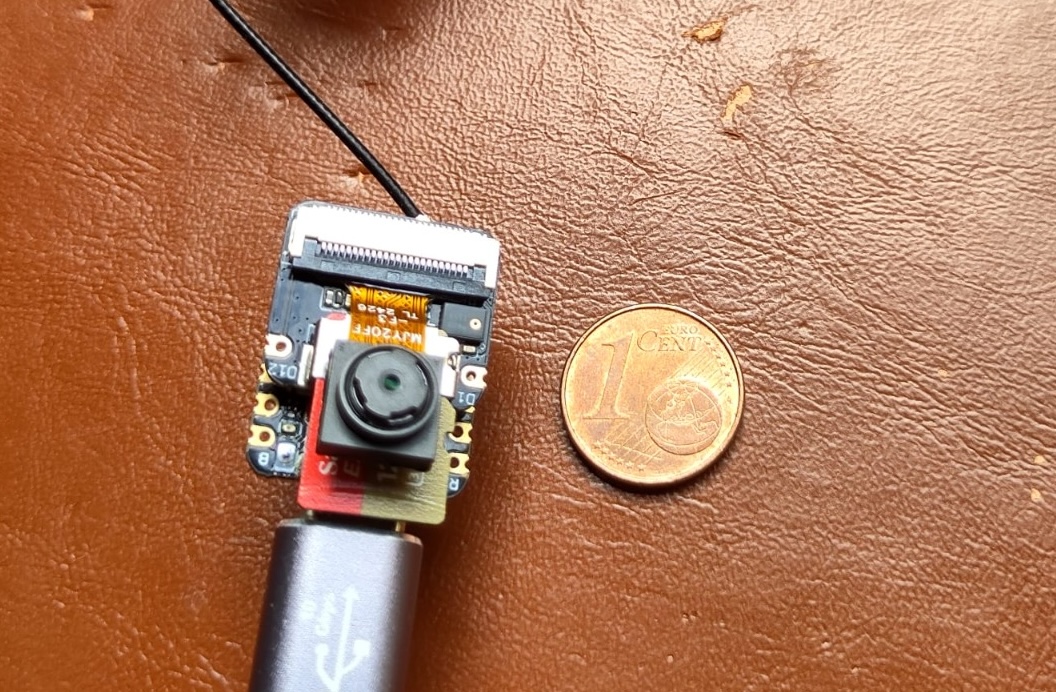
One big advantage is the price.
The hardware used, the Xiao ESP32-S3 Sense, is very inexpensive. In China the board costs about 9 US dollars. At European retailers such as reichelt.de the price is usually between 13 and 15 euros.
That makes the approach scalable. Instead of one expensive system, you can deploy many small devices. The module comes with everything you need: Wi-Fi, SD card and camera.
Connection to the app
Hivora Sense gets really interesting in combination with the app.
In HornetLog you can define monitoring zones. These zones mark areas you want to keep an eye on. So it would be possible to create a monitoring zone right where you have set up the smart bait trap.
As soon as it reports a sighting to the Hivora network, you automatically receive a notification about activity at the bait trap you set up. The sighting can then be conveniently viewed on the map in the app.
Operation with and without Wi-Fi
The system also works without internet.
When Wi-Fi is available, the device can transfer data and send notifications.
Without Wi-Fi it works like a classic trail camera:
- All data is stored on the SD card
- nothing gets lost
Later you can retrieve the data directly at the device via a local Wi-Fi hotspot that the device sets up. Or simply remove the SD card and copy the data manually.
One possible future expansion would be adding LoRa, so that data can also be transmitted over longer distances without Wi-Fi coverage.
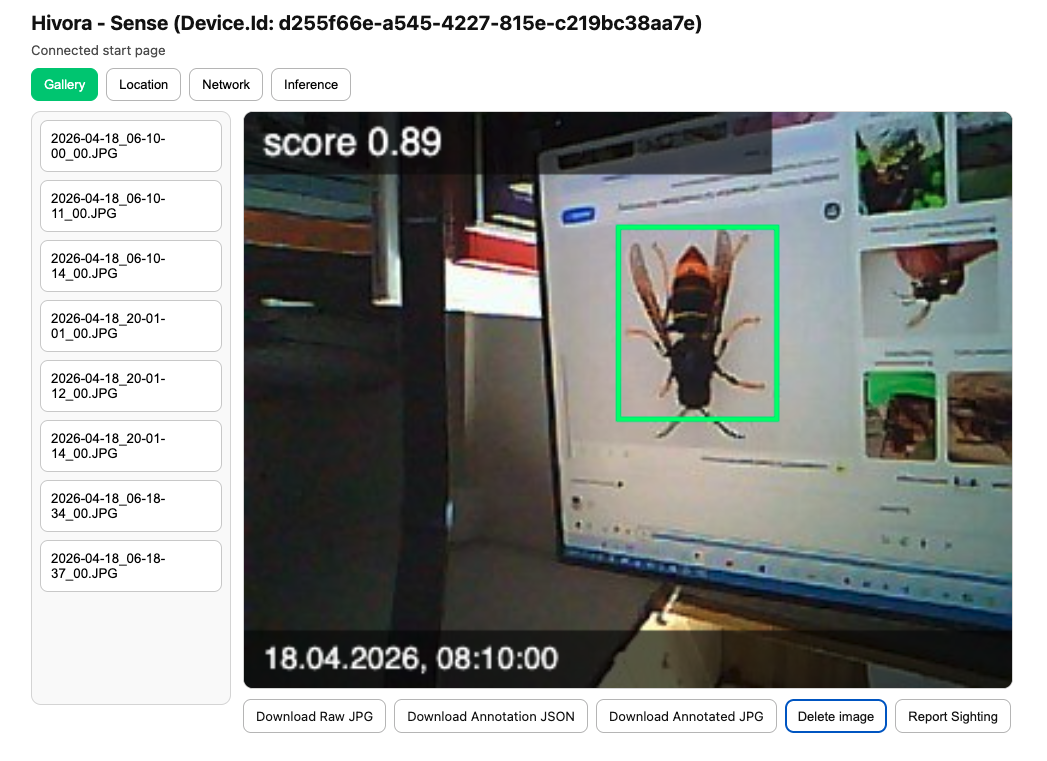
Web interface directly on the device
Every device has its own web interface. It can be opened both with a Wi-Fi connection and without one (local hotspot from the device).
It lets you:
- view images
- check detections
- download data
- adjust settings
For example:
- thresholds
- detection duration
- storage behavior
The entire system stays local and independent.
Challenges in practice
The implementation was demanding.
The ESP32 has to handle several tasks at the same time:
- control the camera
- run the AI
- handle Wi-Fi
- serve the web interface
And only limited resources are available for all of this.
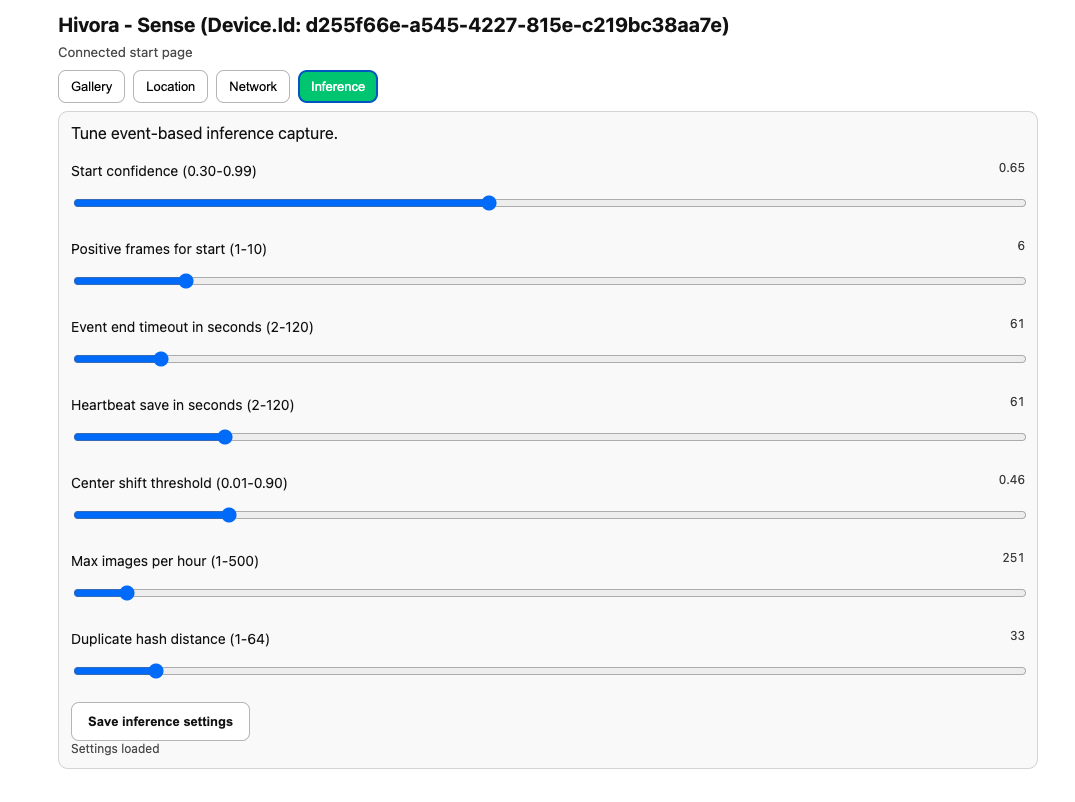
One example: when streaming and AI run at the same time, the system becomes unstable. That is why inference pauses during streaming.
The SD card was a challenge as well. Different cards behave differently. I had to build in additional mechanisms to avoid write errors.
On top of that come the realities of object detection:
- fast movements
- changing light
- brief visibility
Reliable results only emerge once thresholds have been tuned and temporal stabilization is in place.
Hardware: simple and practical
The hardware is deliberately simple.
The camera sits in a 3D-printed mount designed in FreeCAD. It is pushed directly onto the bait trap. The mount consists of 4 to 6 parts. First, the bottom ring that is pushed onto the bait trap. It can be made in any size (radius). The “neck”, or stand, for the camera housing is attached to the ring with a plug-in connection. Only the camera housing itself needs an M3 screw plus nut to fasten it. This makes the camera angle adjustable. Optionally, you can also attach cable clips to the stand for tidy USB cabling.
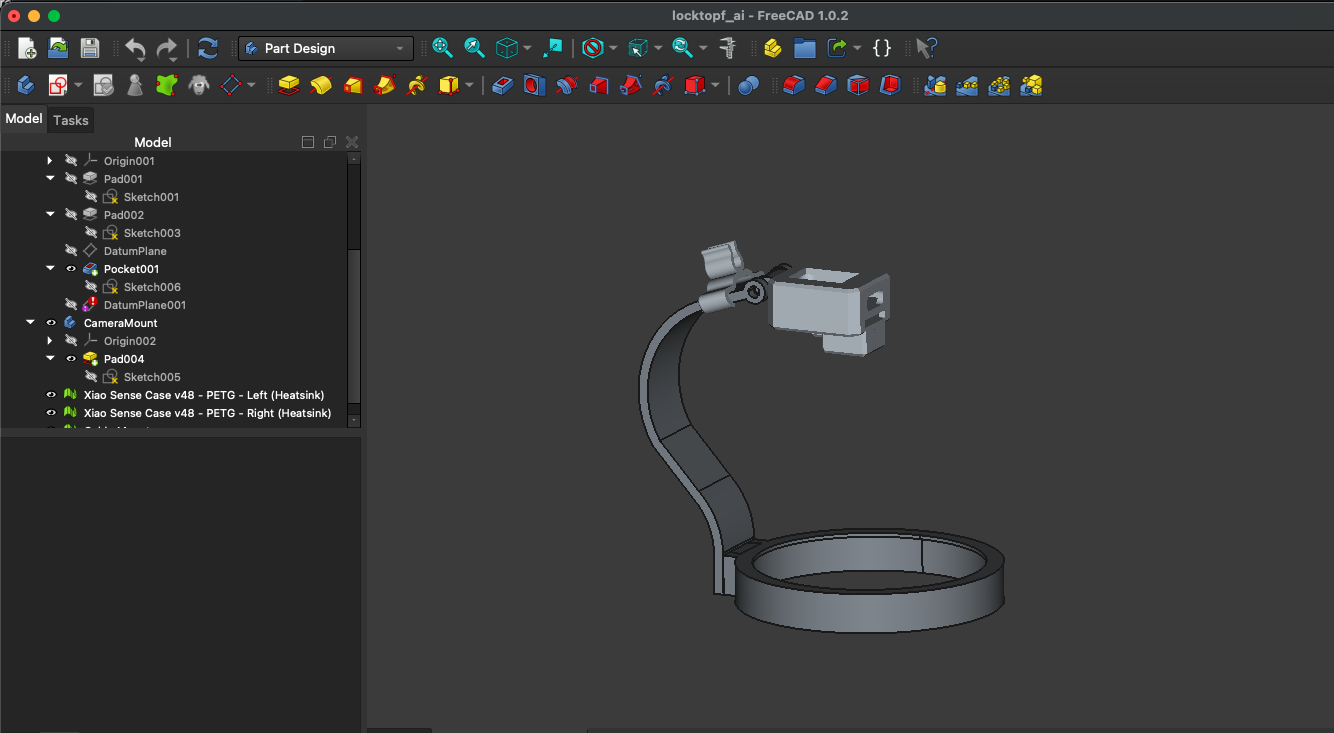
The mount is:
- removable
- easy to reproduce
- suitable for outdoor use
The focus is on practicality, not on perfect design.
From single device to system
Hivora Sense is only one part of the whole.
Together with my projects:
it forms a comprehensive system.
You combine:
- manual sightings
- automatic measurements
This makes it possible to spot patterns and understand developments better.
Outlook: selective trap instead of bycatch
A possible next step goes even further.
The combination of bait trap and local AI opens up a new perspective: selective traps. That is, systems that don’t simply catch everything but respond in a targeted way.
If an Asian hornet (Vespa velutina) is detected reliably, the system could actively intervene in the future. Mechanisms are conceivable that only trigger when the target species has actually been identified.
That would solve a central problem of classic traps: bycatch.
Instead of catching insects indiscriminately, this technology could help to reduce bycatch significantly or, ideally, avoid it altogether. That would turn a simple bait trap into a smart, selective tool for dealing with an invasive species.
Whether and how this can be put into practice remains to be seen. I’m already working on a first concept for a prototype. The potential is clearly there.
You can find more information on the build in the forum: https://hivora.discourse.group/