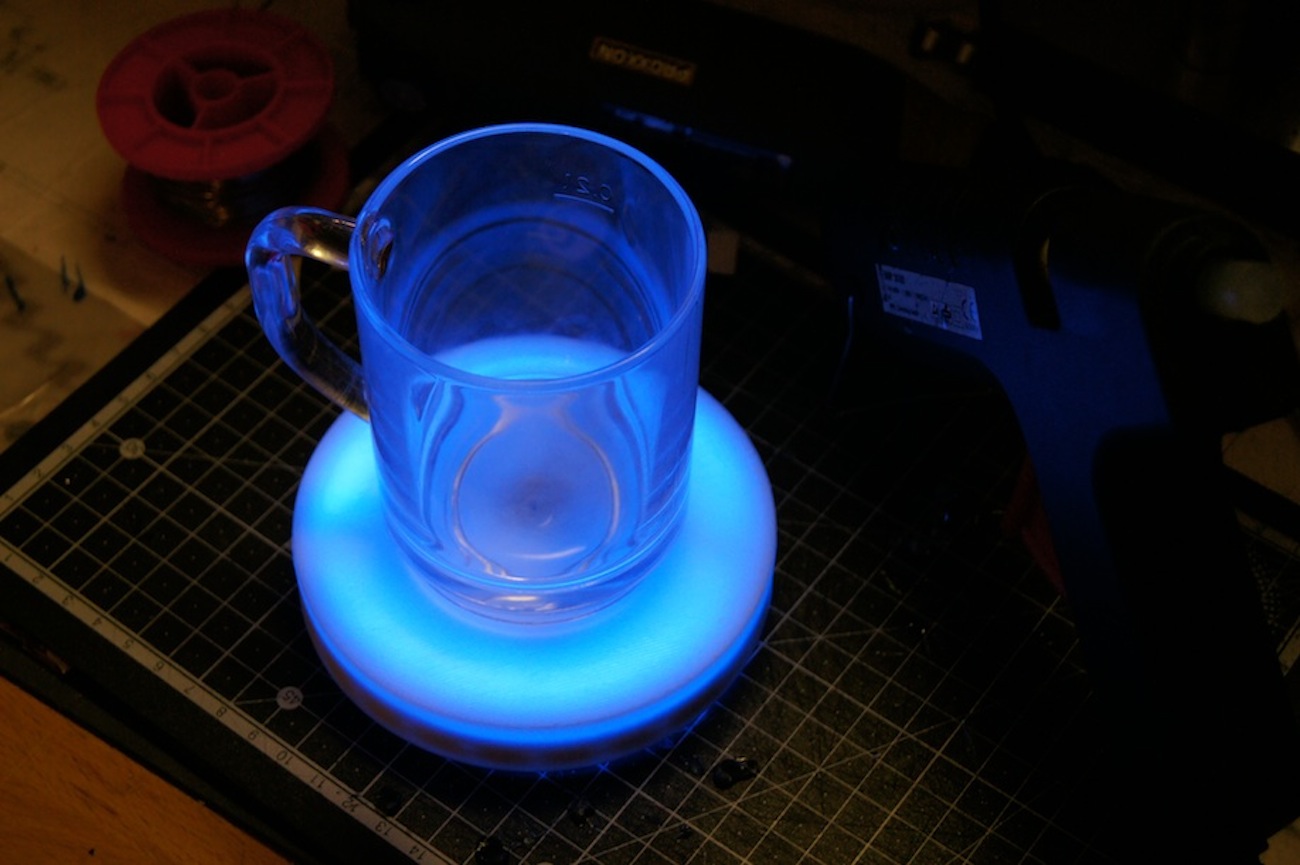
As part of the Make Light 2013 contest, I built a “smart” drink coaster last week. The motto of the contest is: “Who creates the best DIY project on the topic of ‘intelligent light’?”
My idea for this topic is a drink coaster that can detect which drink or vessel is standing on it. To achieve this, I built in 2 sensors: a pressure sensor and a temperature sensor.
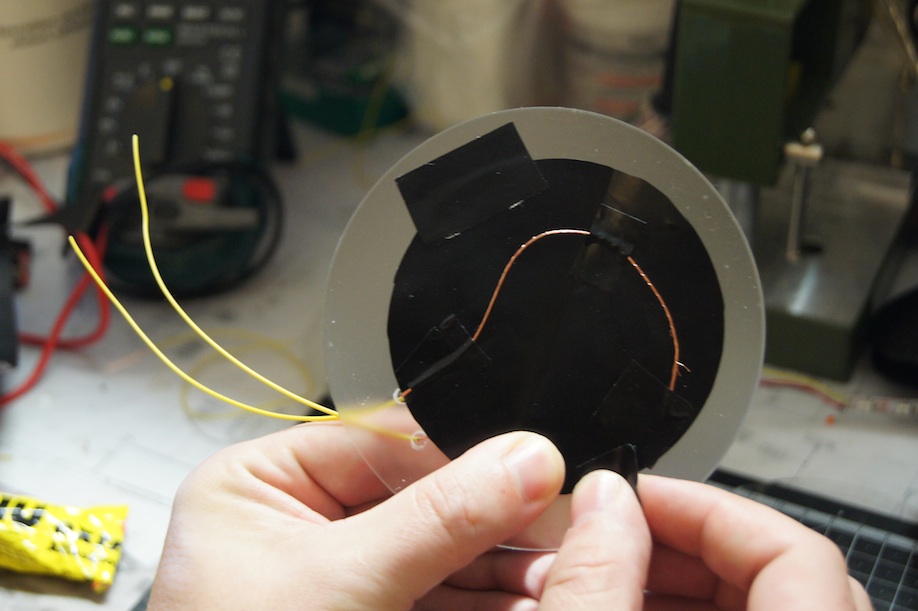
The pressure sensor is made of Velostat and sits in the lower part of the coaster.
The temperature sensor is a TMP006 from Texas Instruments. Since the component is tiny and I didn’t have the time to make a suitable PCB, I simply went with the TMP006 breakout board from Adafruit.
What makes this sensor special is that the temperature is not measured by the sensor touching the surface of the object. Instead, the TMP006 uses a thermopile to absorb the infrared radiation emitted by the surface being measured, and determines the temperature of the object’s surface from the voltage difference this creates across the thermopile. The sensor is addressed via I2C and delivers the temperature directly in °C.
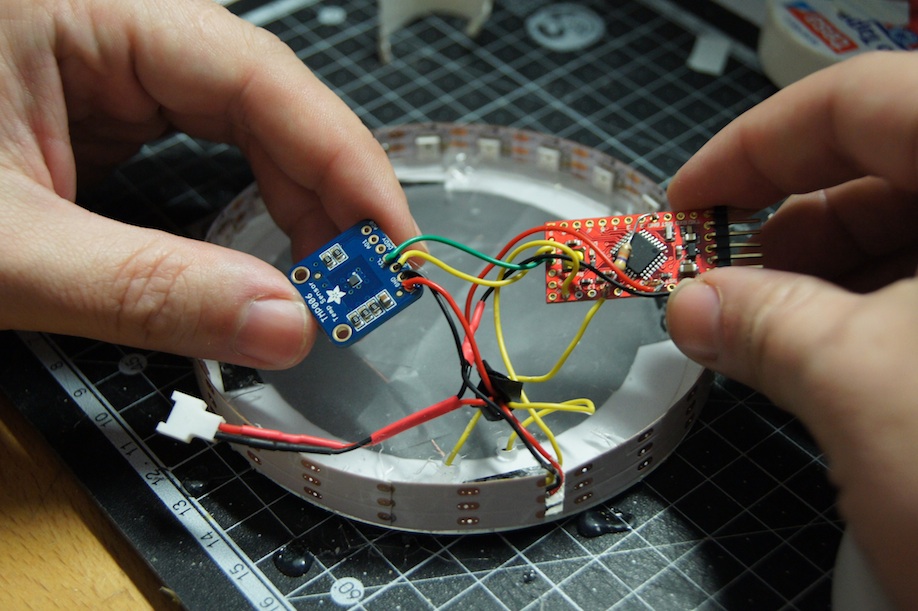
The coaster is controlled by a Wattuino from Watterott. The Wattuino is a small Arduino board that is compatible with the Arduino Mini. The board is very small, which makes it a perfect fit for this project.
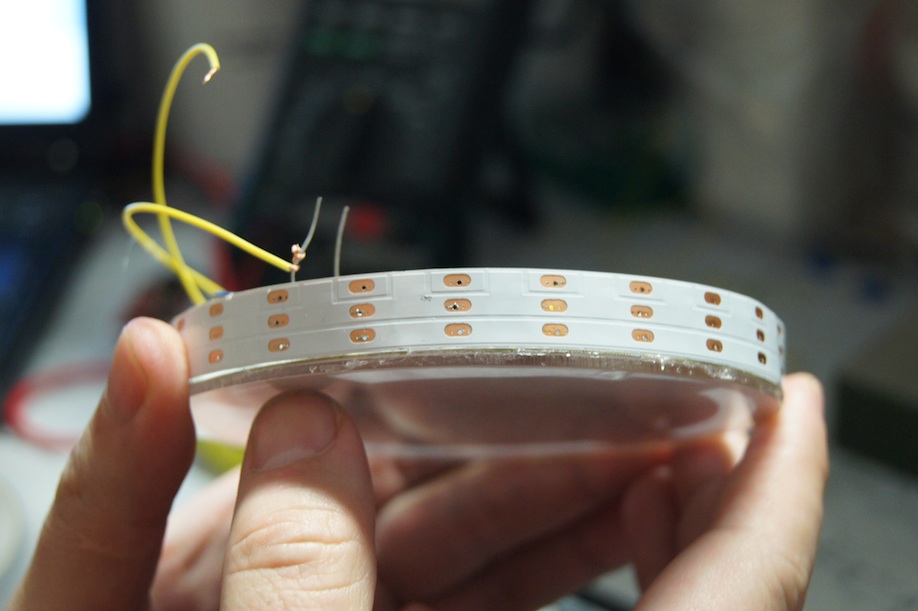
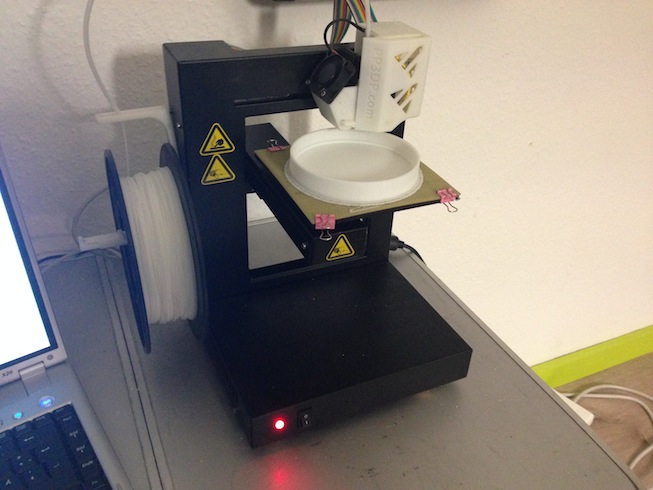
The enclosure is, of course, printed on a 3D printer. Over the past week I experimented a lot with different materials. I started with Plexiglas discs that were held together only by the LED strip (WS2812) around the outside. Unfortunately, the low overall height turned out to be unsuitable in these attempts. 3D printing then saved the project, because it allowed me to make the coaster taller. That way the small 3.7v LiPo battery found its place inside as well. On top of that, the printed enclosure has the advantage that the light from the LEDs comes across as very diffuse. This is also where the Smart Coaster differs from other blinking LED coasters. Most of the coasters I’ve seen so far glow in cold, glaring colors, to the point where they sometimes dazzle you.
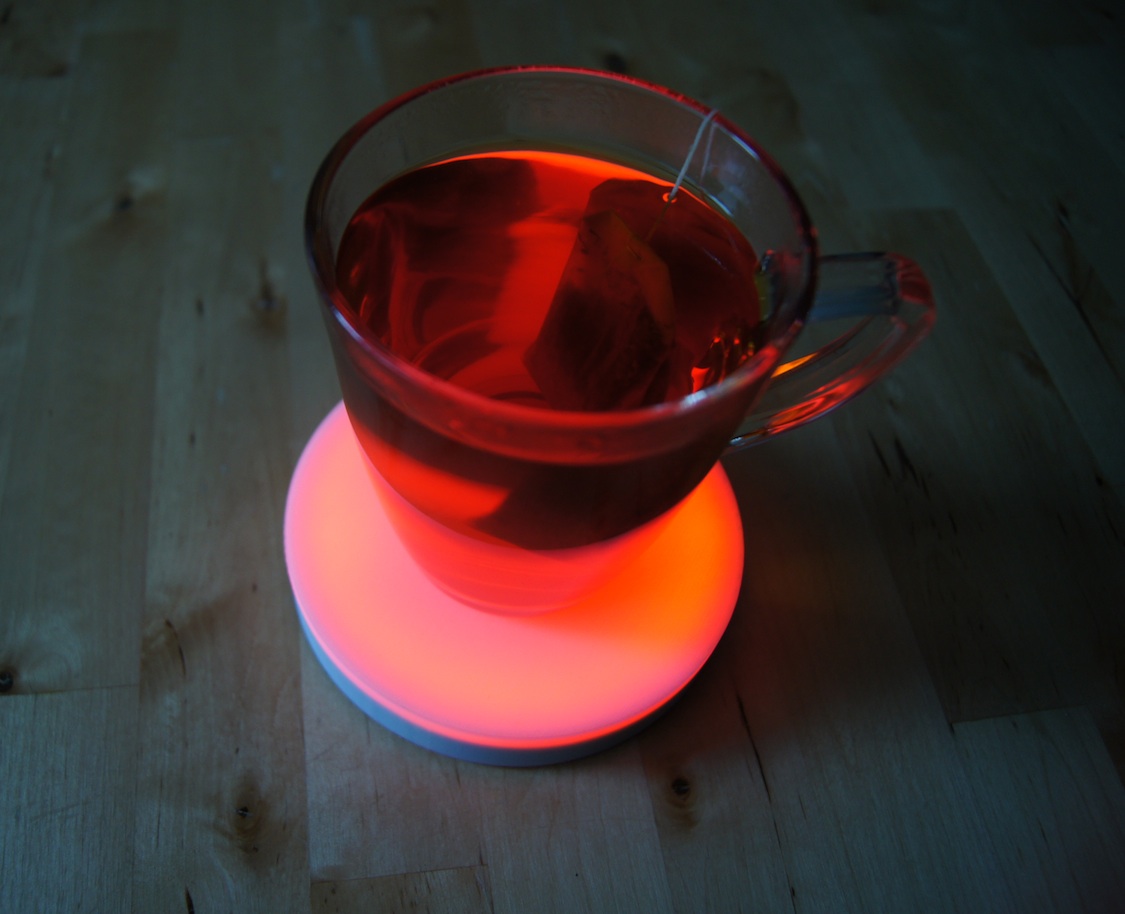
Using profiles generated from the data of the two sensors, the Smart Coaster can tell different glasses and their contents apart. For cold drinks or empty vessels, for example, it shows the color blue. For hot drinks the coaster glows red. For cocktails it displays a changing play of colors.
To get the sketch onto the Wattuino you also need an FTDI breakout board, which is likewise available from Watterott.
The Arduino sketch is available here in the download section. The template for the 3D print can be found on Thingiverse. And a PDF with the build instructions can be found at this link, where you can also vote for me by clicking “Like”.
There are already ideas for converting the Smart Coaster into a party game as well. I’ll write a separate article about that, though.
Complete build instructions are available here!
Comments